

0
Operating Systems
Warehouse, Transport, 3PL, Air Cargo, Commerce, Customs
The Logistics Operating System
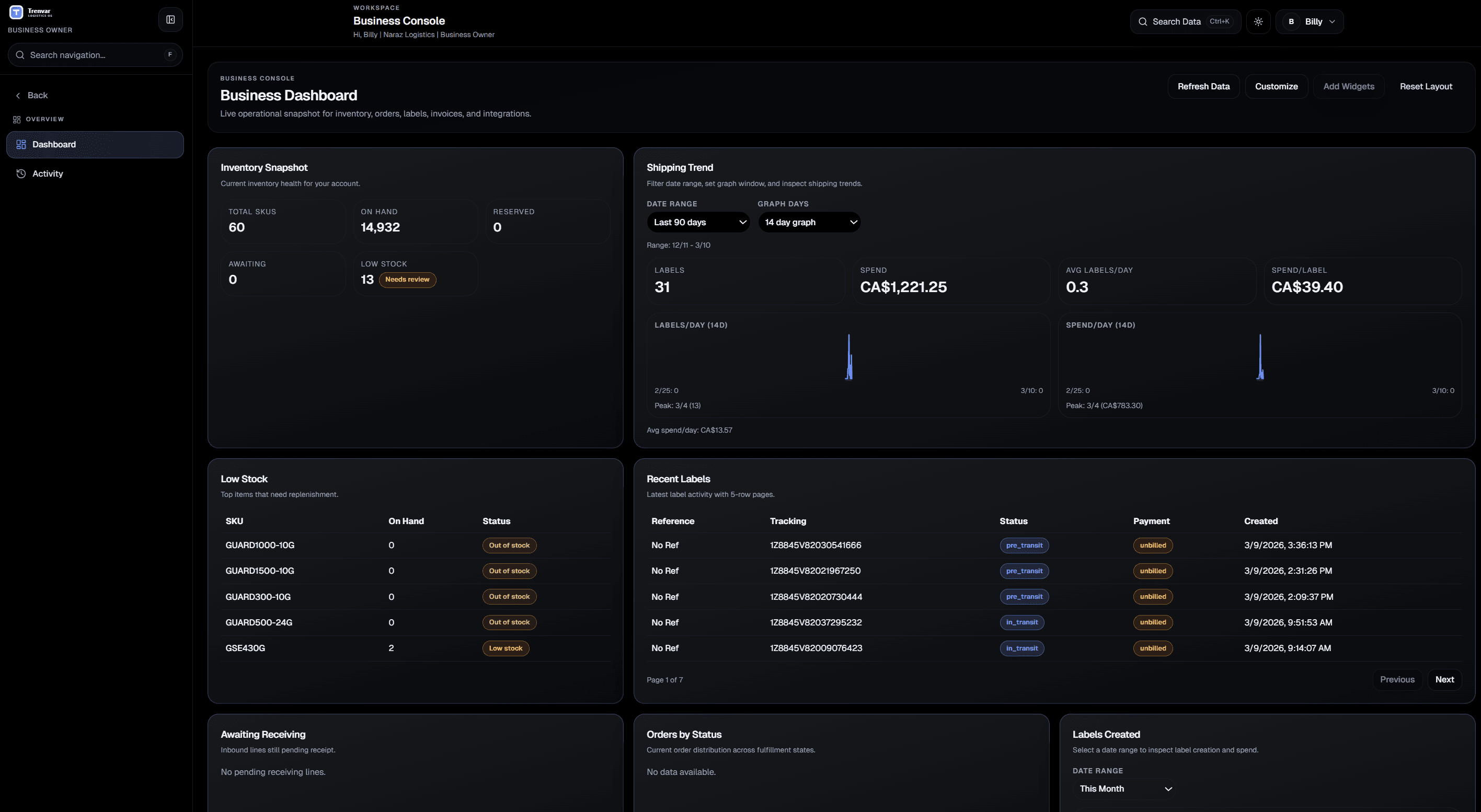
Warehouse, transport, 3PL, air cargo, and commerce — all running from one connected operational engine.
No credit card required · Go live in under 48 hours

The Floor, Connected
Trenvar runs the moments between the racks, trucks, and invoices — one operating layer for every team on the floor.
Warehouse · Transport · 3PL · Air Cargo · Commerce · Customs
Connects with the tools your team already runs on


Why Trenvar
Trenvar connects warehouse operations, shipment execution, customer visibility, and billing workflows into one controlled logistics operating system.
Run receiving, fulfillment, dispatch, and workflow handoffs from one operational layer.
Provide customers with real-time shipment and inventory visibility without exposing internal workflows.
Convert storage, service, and shipment events into invoice-ready records automatically.
0
Operating Systems
Warehouse, Transport, 3PL, Air Cargo, Commerce, Customs
< 0h
Time to First Workflow
Launch inbound and inventory on day one
0%
Billing Accuracy
Every charge backed by a real operational event
0
Unified Platform
One system for floor, route, CRM, and finance
Integrations
Trenvar plugs into the everyday surfaces — communication, commerce, accounting, fleet, and AI — so your customers stay in the tools they know and your team stays in Trenvar.


Execution Flow
Trenvar links floor activity, dispatch execution, and invoice generation without fragmented systems.

Receive against expected quantities and place stock into approved warehouse locations.

Move inventory through putaway, picking, packing, and movement workflows with scan checkpoints.

Assign jobs, track route status, and capture proof-of-delivery with role-safe controls.
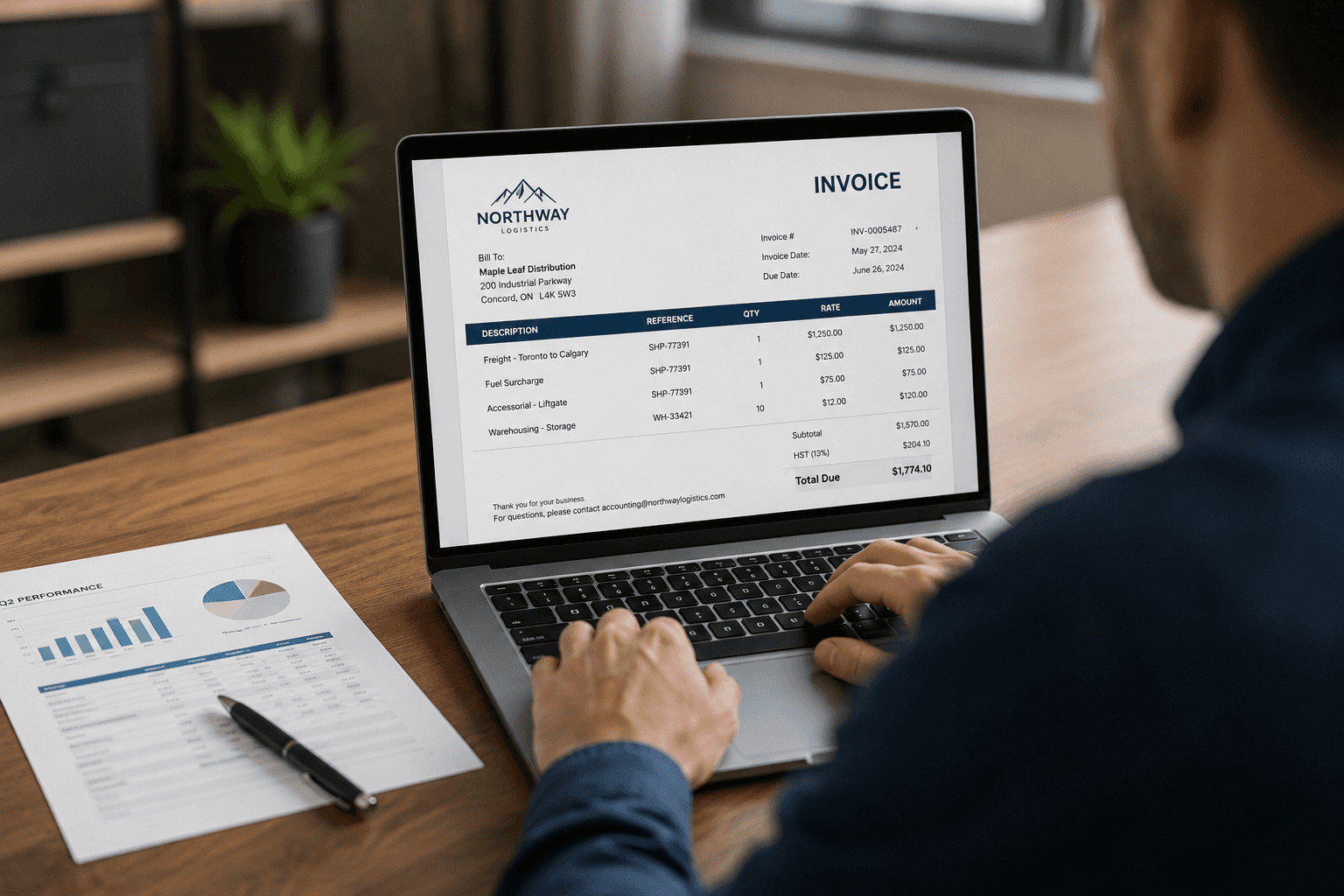
Generate charges from storage and shipment events so invoices match real operational activity.
Operating Systems
Use one platform and activate the OS package that matches each operational engine.
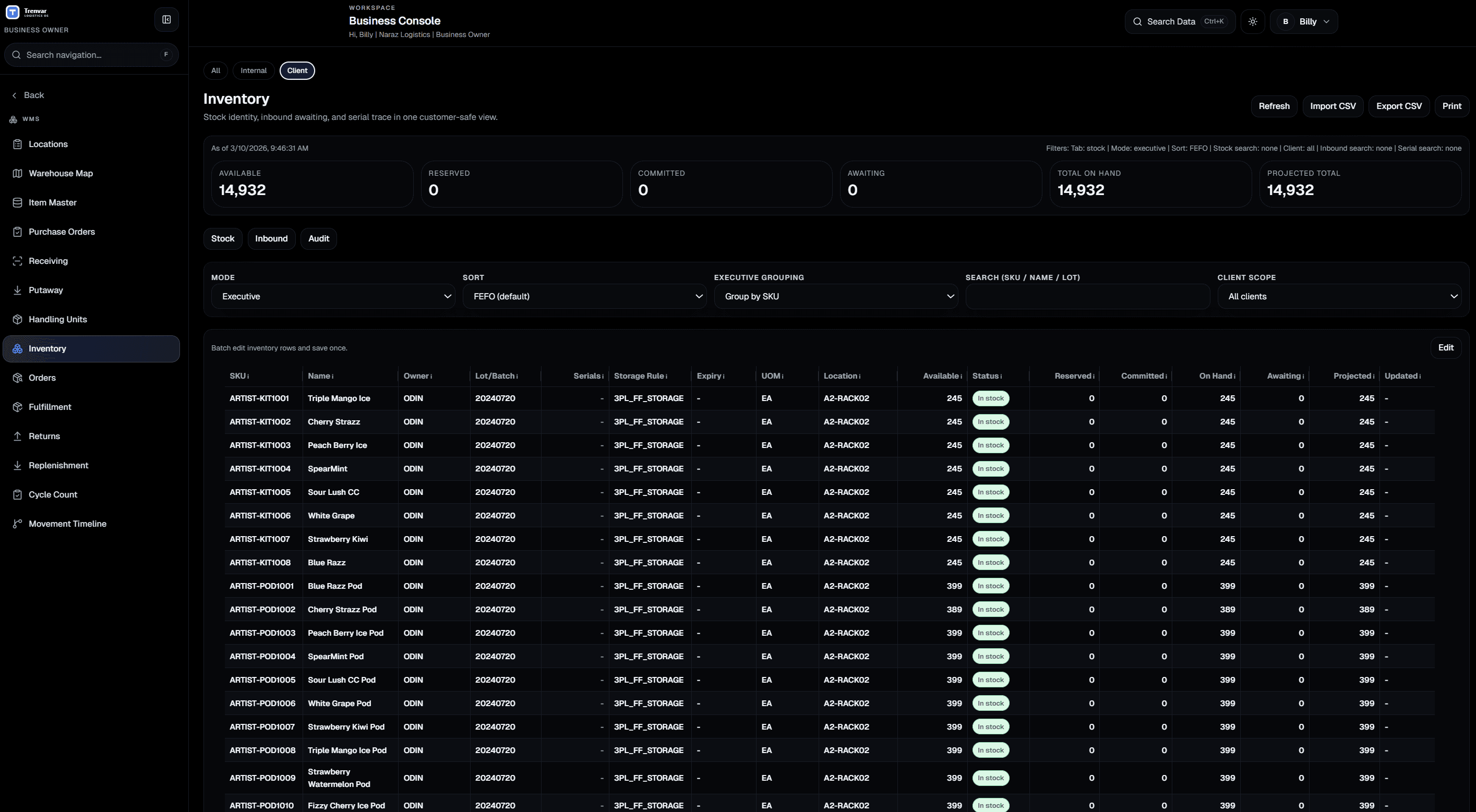
Run receiving, putaway, inventory, and fulfillment in one warehouse operating engine.
Compliance Connectivity
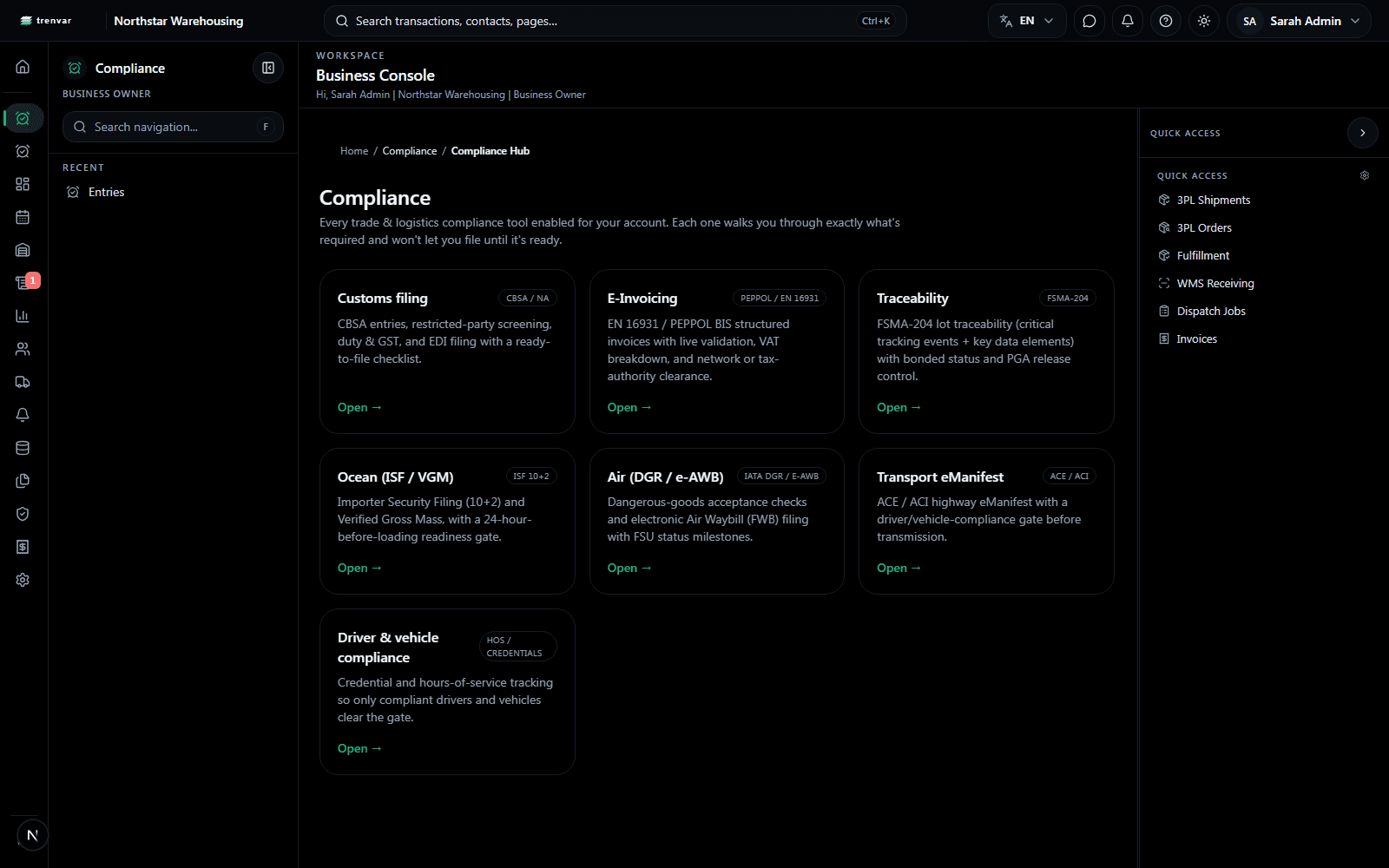
EDI (Electronic Data Interchange) is the standard electronic format customs agencies and carriers use to receive filings, instead of paper or email. CARM (the CBSA Assessment and Revenue Management system) is how importers and licensed brokers account for duties and taxes with the Canada Border Services Agency. Trenvar builds your release and accounting messages, runs ready-to-file checks, then transmits them through a certified connection under your own licence. Start in a labelled sandbox, then switch to live when you are ready.
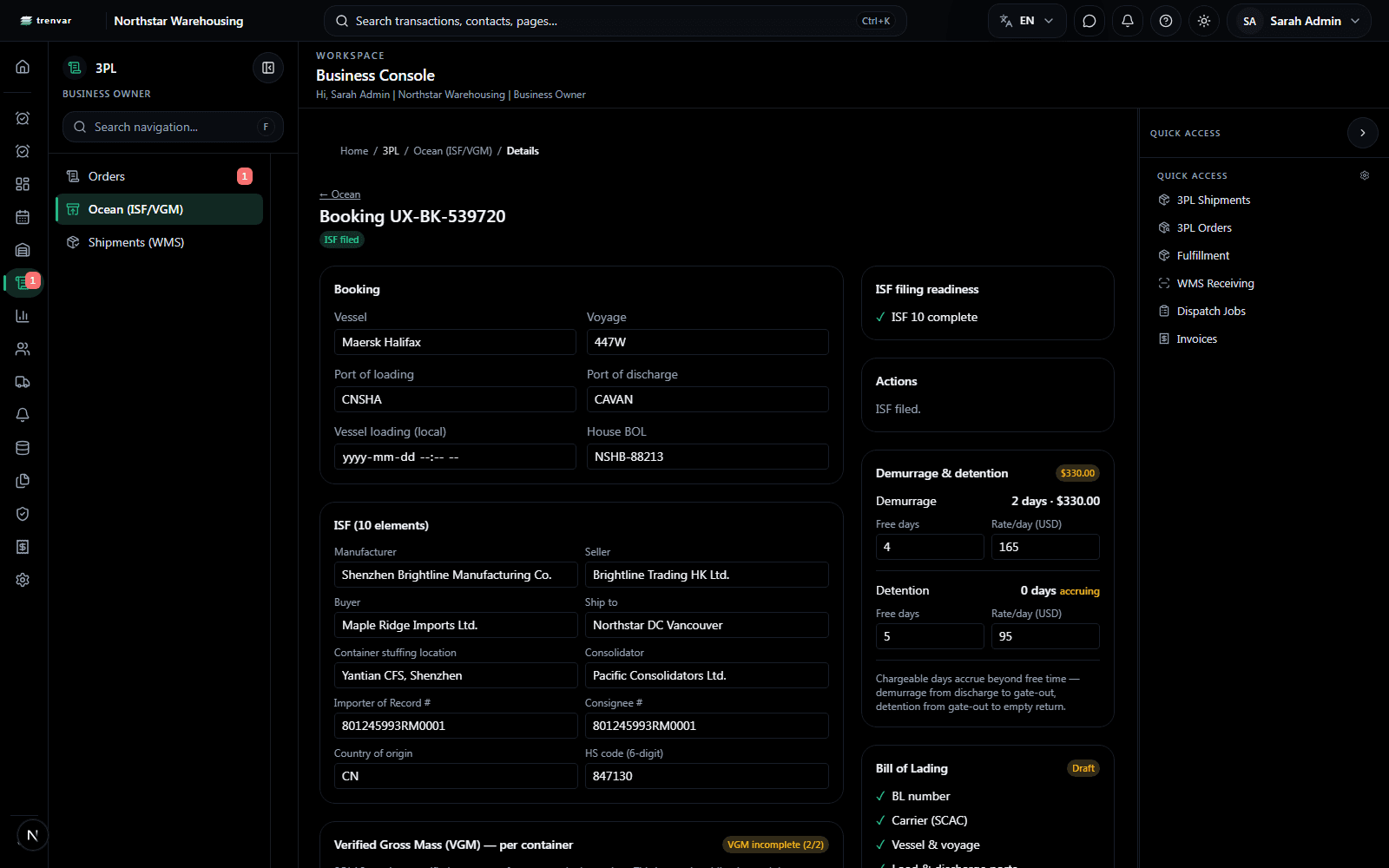
Ocean & Freight Compliance
Trenvar files the CBP Importer Security Filing (ISF 10+2) and captures the SOLAS Verified Gross Mass for every container, with a readiness gate on the 24-hour-before-loading window. The same booking tracks the container lifecycle from gate-in to empty return and calculates demurrage and detention as chargeable days accrue, so nothing slips past free time unnoticed.
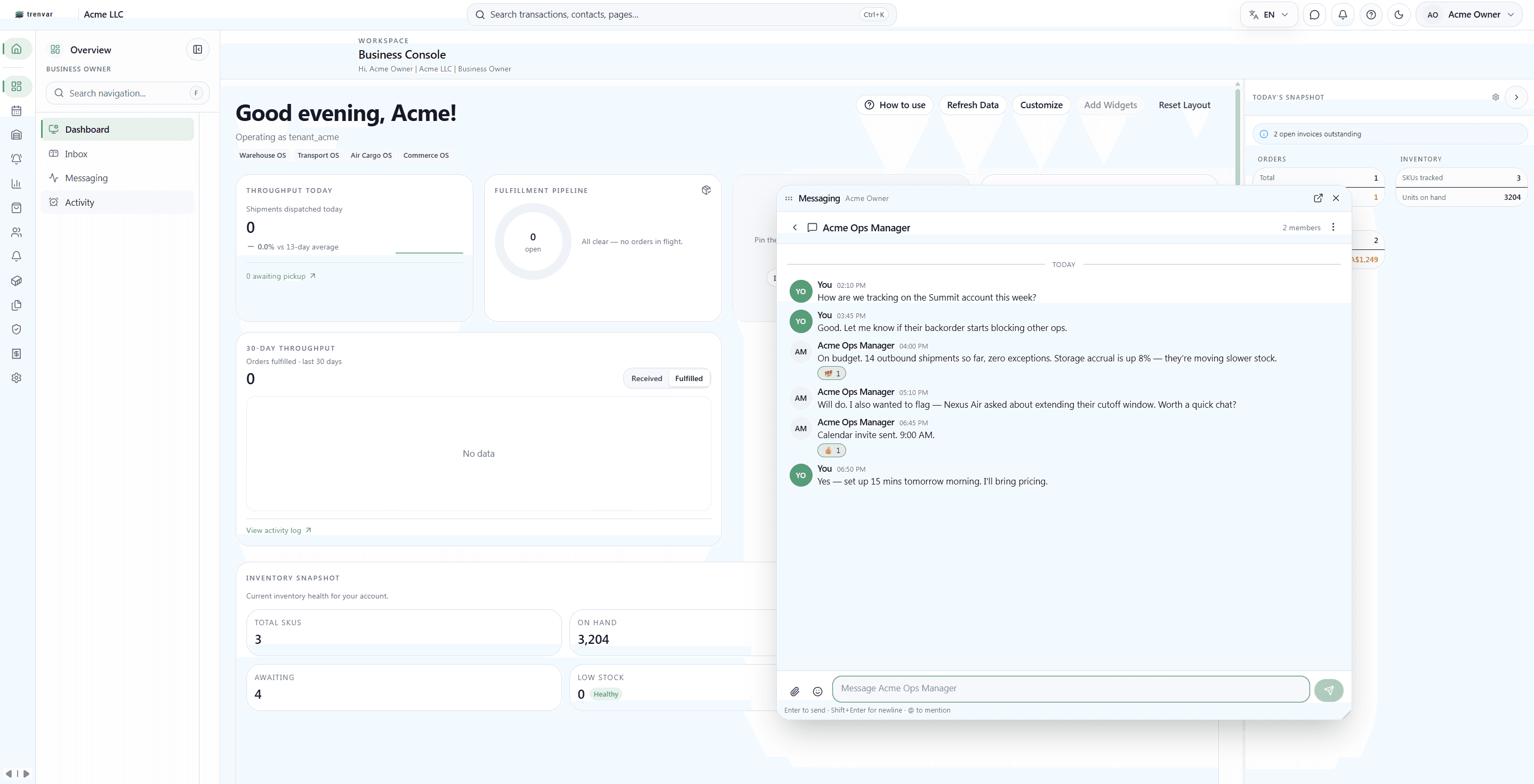
Built-in Collaboration
Trenvar ships with a full messaging layer for your operations team — channels, DMs, threads, mentions, reactions, attachments. The differentiator: your downstream customers can DM your team directly from their portal. One conversation thread, one audit trail, no separate Intercom or Slack-Connect tax.
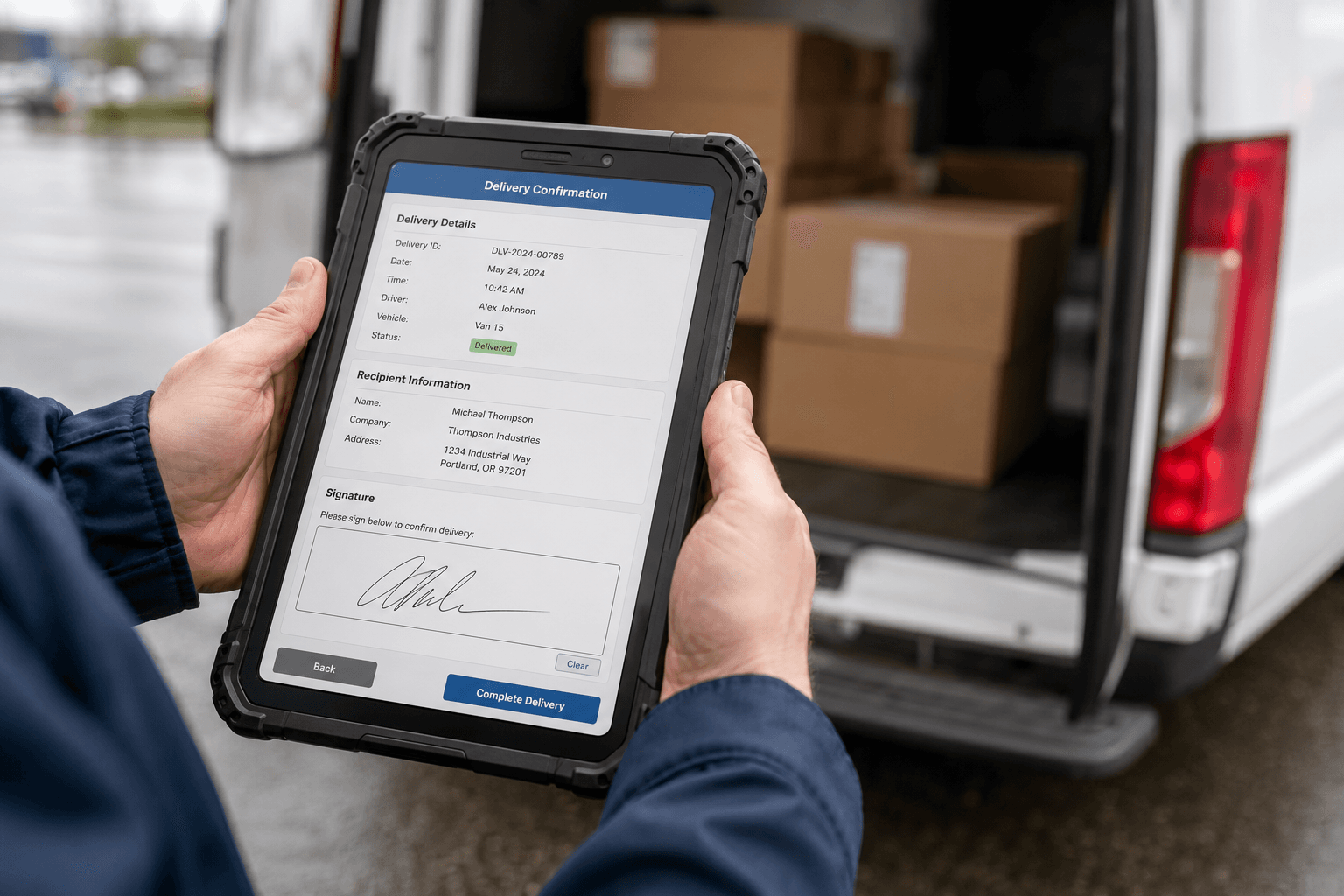
Last Mile, Confirmed
Driver execution, exception capture, and customer-facing POD all live alongside the warehouse events that produced them — no exports, no chasing screenshots.
Built for Execution
Trenvar replaces fragmented tools with one operating system — here's what that changes.
60% faster
Receiving to Putaway
Structured scan workflows eliminate manual data entry and reduce dock-to-shelf cycle time.
Zero gaps
Handoff Traceability
Every movement from floor to route to invoice is linked in one operational timeline.
100% event-backed
Invoice Accuracy
Charges are generated directly from storage, service, and shipment events — not spreadsheets.
FAQ
Most teams start with one OS package, then activate additional OS engines as operations expand.
Yes. Operations teams run day-to-day workflows, while billing teams use the same event data for storage charges, service lines, and invoice workflows.
Commerce OS layers buyer ordering and storefront controls on top of Warehouse OS, so order intake stays connected to operational execution.
Yes. Customer-level ownership, permission boundaries, and billing segmentation are core parts of the platform model.
Implementation is phased by workflow. Most teams launch inbound and inventory first, then fulfillment and dispatch, then billing automation and integrations.
EDI stands for Electronic Data Interchange. It is the standard electronic format that customs authorities and carriers use to receive filings, instead of paper forms or email. Your release and accounting messages are sent in the exact structure the agency system reads. Trenvar builds those messages for you and transmits them through a certified connection under your own licence, so a filing goes from ready to submitted without rekeying.
CARM is the CBSA Assessment and Revenue Management system. It is how importers and licensed customs brokers in Canada account for duties and taxes and manage their relationship with the Canada Border Services Agency. Trenvar prepares your commercial accounting the CARM way and files it under your own licence, with ready-to-file checks before anything transmits.
Run warehouse, transport, and driver workflows from your Android device. Full offline capability with real-time sync.
Android 8.0+ · Direct install
Book a walkthrough focused on your workflows, customer model, and rollout priorities.
No credit card required · Go live in under 48 hours


